Honing and Polishing Dolomite
A Guide for Stone Restoration Contractors by Fred Hueston
Dolomite has become an increasingly popular choice for countertops and floors, but restoring its finish requires a slightly different approach than polishing traditional marble. Although dolomite is often grouped with marbles because of its similar appearance, its composition makes it a little tougher — and that changes the way we hone and polish it.
Understanding Dolomite
Dolomite is a sedimentary carbonate rock that primarily consists of the mineral dolomite (calcium magnesium carbonate). It’s harder and more scratch-resistant than typical calcite-based marbles, but it’s still softer than true granites. On the Mohs hardness scale, dolomite generally ranks around 3.5 to 4, while typical marble sits around 3. This slight increase in hardness means that dolomite can sometimes respond differently during honing and polishing processes.
Honing Dolomite
The honing process for dolomite is similar to marble but requires a little more patience. Here are key points to keep in mind:
- Start with finer grits:
Because dolomite is denser and tougher than marble, you may find that aggressive lower grits (like 50 or 100) can create deep scratches that are harder to remove. In many cases, starting with a slightly finer grit — like 120 or even 220 — is a safer approach, unless you are correcting heavy damage. - Use diamond abrasives made for harder stones:
Some diamond abrasives are specifically formulated for softer calcite marbles and may not cut dolomite effectively. Choose diamond pads designed for mid-range hardness materials. - Check your scratch pattern carefully:
Dolomite’s surface can sometimes hide fine scratches during the honing phase. Make sure to thoroughly inspect your scratch pattern under good lighting before moving to the next grit level. - Be patient:
Dolomite hones more slowly than marble, so allow extra time to ensure you’re fully removing scratches at each step.
Polishing Dolomite
Polishing dolomite differs from polishing traditional marble in a few important ways:
- Polishing Powders:
Standard marble polishing powders (which are usually oxalic acid-based) may not always produce the same quick high-gloss finish on dolomite. Sometimes they have less reaction with dolomite’s magnesium content, resulting in a slightly muted polish if used alone. - Mechanical Polishing:
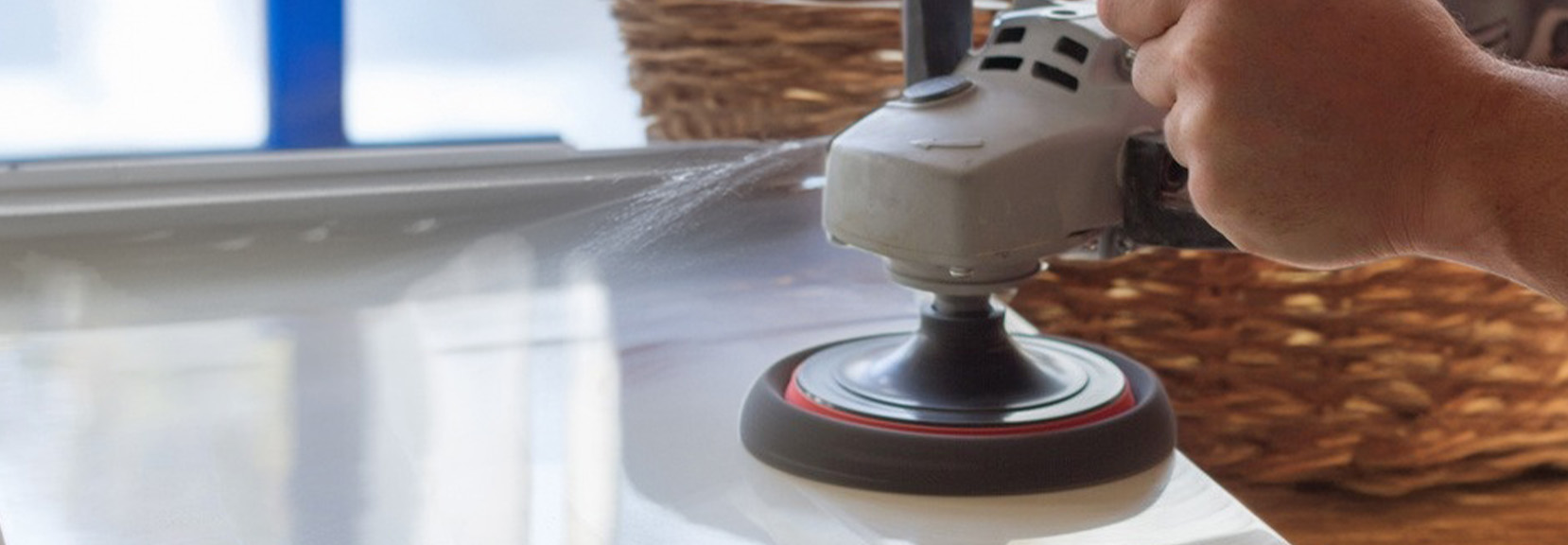
Dolomite often responds better to a higher mechanical polish using resin-bond diamond pads or higher-grit diamond powders. You may need to bring the stone to a much higher mechanical hone (3000 grit or even beyond) before finishing with a polishing compound. - Less Chemical Reaction:
In marble polishing, much of the final gloss comes from a chemical reaction between the polishing powder and the calcium carbonate in the marble. Dolomite, having a different chemical makeup (with more magnesium), may not react as strongly, meaning the final shine depends more on thorough honing and mechanical polishing rather than relying just on polishing compounds. - Don’t Force It:
If a dolomite surface doesn’t achieve the mirror-like gloss you’re used to with marble, it’s often not a flaw in your process. Dolomite naturally tends to develop a softer, satin-like shine rather than a deep, wet look unless taken to extremely high grits and polished carefully.
Summary
When honing and polishing dolomite, remember:
- Be less aggressive when choosing starting grits.
- Use diamonds rated for mid-hardness stone.
- Mechanically bring the surface to a finer level before applying polishing powders.
- Expect a slightly different (and sometimes softer) final gloss compared to marble.
Mastering dolomite finishes takes practice, but understanding its differences from marble will help you set proper expectations — both for your process and for educating your clients about the natural beauty and limits of this popular material.