Discover Fossils in Modern Buildings
By Fredrick M. Hueston
If you’ve ever walked through a hotel lobby, airport, or office tower lined with limestone, you’ve probably been surrounded by ancient life without even realizing it. Every square foot of limestone tells a story that started millions of years before any architect drew up plans.
Limestone: A fossil Rich Time Capsule
Limestone isn’t just a pretty building stone. It’s the compressed remains of ancient sea life. Most limestone formed in warm, shallow oceans filled with corals, shellfish, algae, and other organisms. Over millions of years, these creatures died, their calcium rich shells settled to the seabed, and layer after layer compacted into solid rock. The result is a natural fossil record built right into the stone.
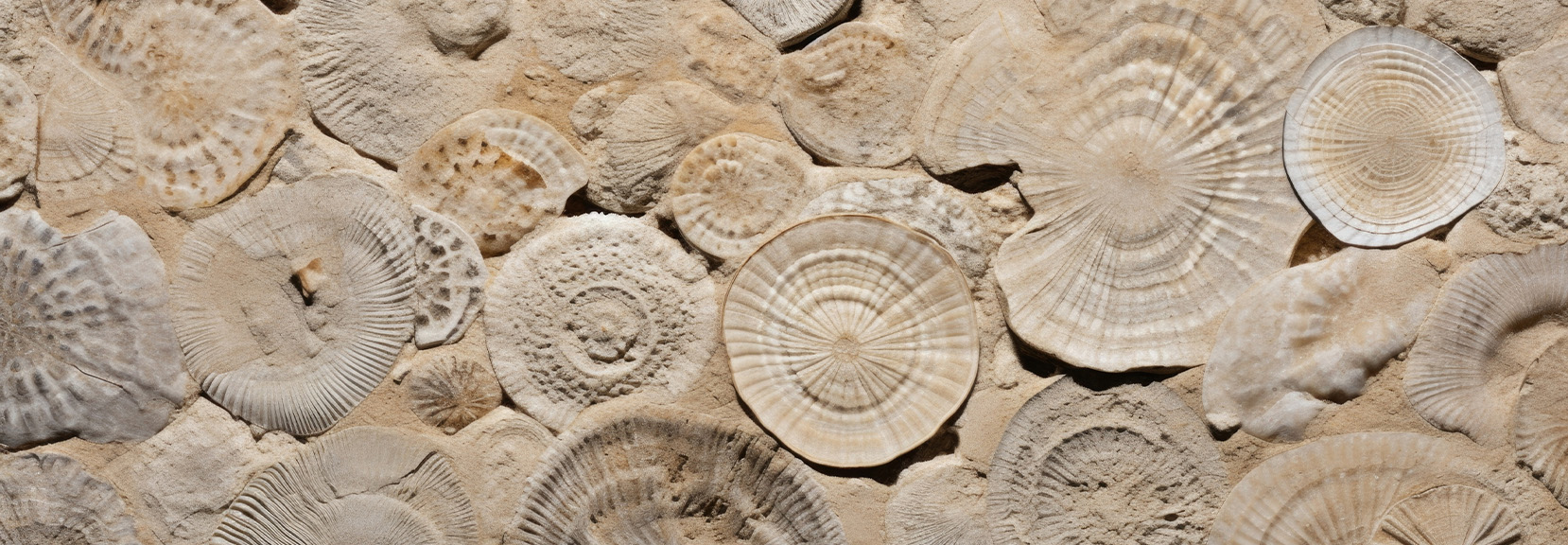
When a quarry cuts blocks of limestone, those fossils are exposed. Fabricators polish or hone the slabs, often revealing stunning details like shell imprints, coral branches, or tiny marine creatures frozen in time.
What To Look For
Next time you’re in a building with limestone floors or walls, slow down and look closely at the surface. Here’s what you might spot:
Shells and fragments: Small spiral shells (gastropods) or clam like shapes are the most common fossils. They often look like white or gray outlines against a tan or cream background.
Coral patterns: In some limestones, you’ll see circular or honeycomb like patterns. Those are ancient corals or colonies of tiny organisms called bryozoans.
Crinoids: These are ancient sea lilies. They look like little stars, rings, or stems with segmented patterns.
Ammonites: If you’re lucky, you’ll see coiled shell fossils that resemble nautilus shapes. These are rare but unmistakable.
Trace fossils: Sometimes, the fossils aren’t shells at all but burrows, trails, or impressions left by long gone creatures
Lighting can make a big difference. Fossils often stand out best in raking light or at certain angles on polished stone.
Why It Matters To Stone Pros
For restoration contractors, fabricators, or installers, spotting fossils can tell you a lot about the stone you’re working with. Fossil density and structure affect how the limestone behaves during cutting, polishing, or honing. Areas packed with fossils can be softer or more porous. In restoration, knowing where the fossils are helps you avoid over honing or rounding their edges, which can blur the stone’s natural beauty.
Plus, it’s a great conversation starter with clients. Pointing out a fossil in their lobby or countertop instantly gives the stone more character and reminds them they’re literally standing on ancient history.
A Walk Through Time
Next time you’re in a modern building clad in limestone, take a minute to look down or at the walls. Those patterns aren’t random, they’re the remains of marine life that lived hundreds of millions of years ago. You might be polishing a floor that once sat on an ocean floor where coral reefs thrived and trilobites crawled.
So, before you call it just another limestone job, remember, you’re working with the Earth’s oldest artwork.