Why Are Marbles Called Marbles?
You’ve probably picked up one of those little glass balls at some point, maybe as a kid, maybe stepping on one in the garage and nearly breaking your neck. We call them marbles. But here’s the question most people never stop to ask: were they ever actually made from marble?
Short answer, yes. But not the way you might think.
Before Glass Took Over
Let’s go back a few hundred years.
Before glass marbles took over, kids were playing with whatever they could get their hands on. Clay, stone, even nuts or seeds. In Europe, especially in places like Germany, some of the earliest “real” marbles were carved out of stone. And yes, that included actual marble. Limestone and alabaster too, but marble was common enough that it stuck.
Now picture that for a second. Instead of a smooth, colorful glass marble, you’ve got a little hand-shaped stone ball. Not perfectly round, not perfectly smooth, but good enough for a game in the dirt. That was the original deal.
Where the Name Came From
The name comes from the material. The word “marble” traces back to the Latin marmor, which simply means stone. Over time, it got tied specifically to the polished decorative stone we all know today. So when kids started playing with small balls made from that material, calling them “marbles” made perfect sense.
The Rise of Glass Marbles
By the 1800s, German glassworkers figured out how to mass-produce glass marbles. These were brighter, smoother, and way more consistent than anything carved out of stone. They rolled better, looked better, and honestly, they were just more fun. The industry took off, and places like Lauscha, Germany became famous for it.
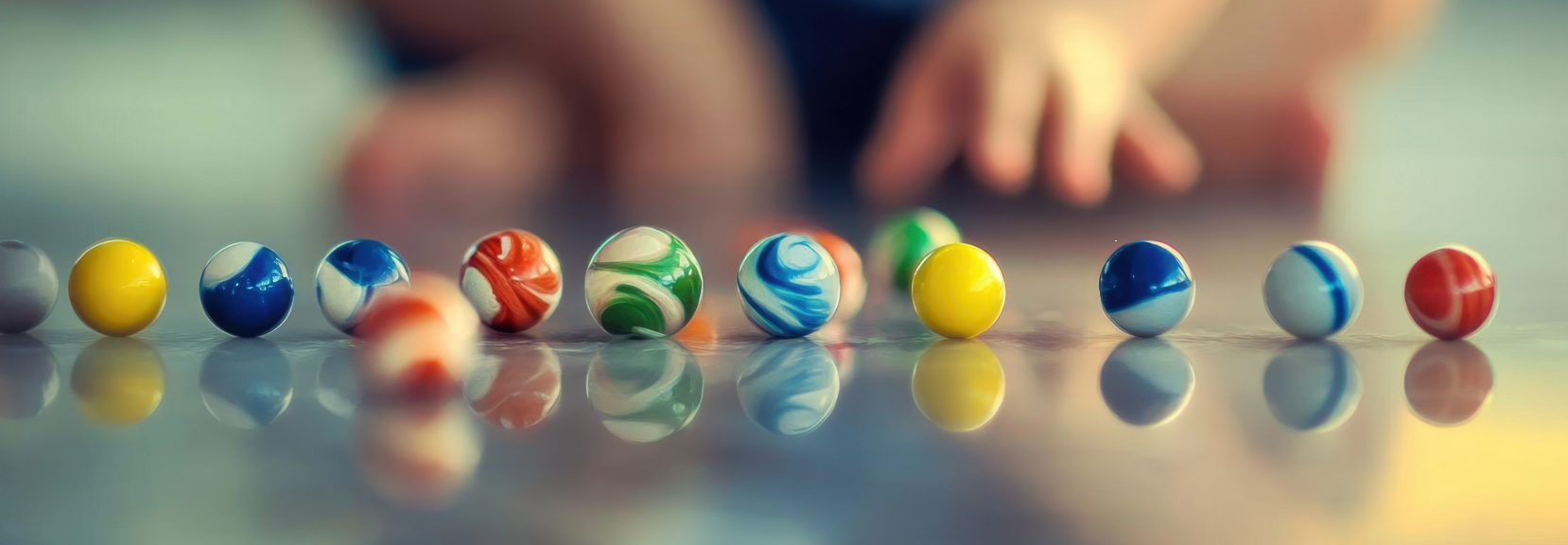
Eventually, the United States picked up on it too. Companies like Akro Agate Company and Peltier Glass Company started cranking them out by the millions in the early 20th century. That’s when marbles really became what most of us remember, colorful glass balls with swirls, cats-eyes, and all kinds of designs.
Why the Name Never Changed
But the name never changed.
Even though the material shifted from stone to glass, people kept calling them marbles. Same game, same idea, just a better product. Kind of like how we still say “dial a phone” even though nobody’s turning a dial anymore.
A Stone Pro’s Perspective
Here’s the interesting part from a stone guy’s perspective.
True marble, the kind used in countertops and floors, would actually make a pretty lousy toy marble by today’s standards. It’s relatively soft as stones go, scratches easily, and wouldn’t hold up well bouncing around on concrete or gravel. The old stone marbles wore down fast, chipped, and lost their shape. Glass solved all those problems in one shot.
So the name stuck, but the material moved on.
Every now and then you’ll still find stone marbles, mostly as novelties or collector pieces. Some are even made from real marble today, but they’re not what kids are playing with in the driveway.
The Hidden Truth Behind the Name
So yeah, the marbles you played with as a kid probably weren’t marble at all. But the name? That’s a leftover from a time when they actually were.
Funny how that works.