Diamonds Aren’t Forever: Tips To Extend Your Pad’s Life
By Frederick M. Hueston
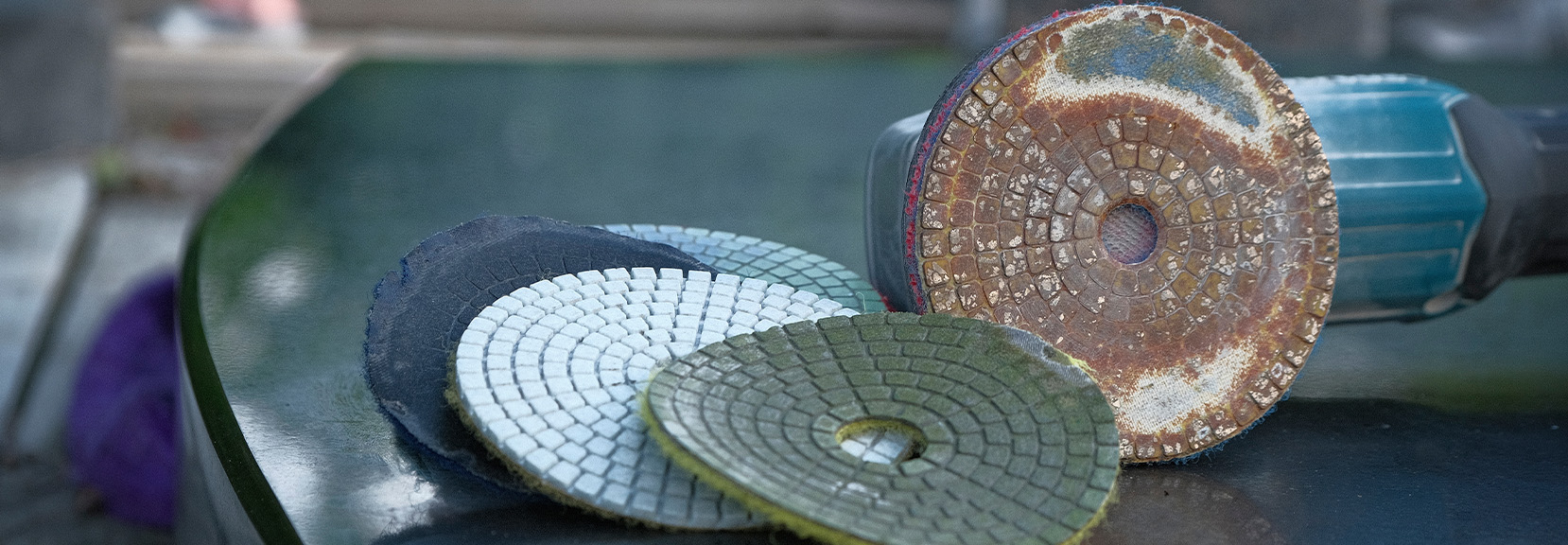
Let’s clear something up right away. The diamonds in your abrasives aren’t like the ones in a jewelry store. They don’t sparkle for eternity or get passed down for generations. They wear out, and sometimes faster than you think. But with a little care and know-how, you can stretch their life and get your money’s worth before tossing them in the scrap bin.
1. Know What’s Inside
Not all diamond abrasives are created equal. Some use synthetic diamonds that vary in hardness, shape, and concentration. Cheaper pads often contain fewer diamonds or use less durable bonds, meaning they wear down faster. Before you blame your technique, make sure you’re using quality abrasives suited to the stone you’re working on.
2. Use the Right Speed and Pressure
More pressure doesn’t mean faster cutting. In fact, excessive pressure and high RPMs can glaze over the diamonds, heat them up, and destroy the bond holding them.
- Use moderate pressure.
- Maintain enough water to keep the pad cool.
- If your pad starts skating or generating heat, back off a little.
3. Keep It Cool
Heat is a diamond’s enemy. Overheating can cause the metal or resin bond to release the diamonds prematurely. Always use adequate water flow, especially when dry-cut pads are not designed for that purpose. On wet systems, make sure the water is evenly distributed, not just dripping from one side of the machine.
4. Match the Tool to the Job
If you’re working on a soft stone like marble, you don’t need the same aggressive metal-bond pad you’d use on granite.
- Using too hard a bond on a soft surface causes glazing.
- Using too soft a bond on hard stone wears the diamonds too quickly.
5. Don’t Skip Grits
Skipping grits might save time at first, but it usually costs you more in the long run. Each grit level prepares the surface for the next. If you jump ahead, the higher-grit pads have to do the heavy lifting, which shortens their life and produces uneven results.
6. Keep Pads Clean
Dirty pads are like sandpaper that’s already clogged. Rinse them often, especially between grit changes.
- Residue, slurry, and trapped particles create friction.
- A quick rinse in clean water can double a pad’s life.
7. Avoid Contamination
Mixing pads between different materials—say, granite one day and concrete the next—contaminates the surface and ruins cutting performance. Once a pad is dedicated to a type of stone, keep it that way. Label them if needed.
8. Store Them Properly
Leaving your pads sitting in a bucket of slurry or baking in a hot truck is a quick way to ruin them. After use:
- Rinse them clean.
- Let them dry.
- Store them flat in a clean, dry area.
Warped pads wobble and wear unevenly.
9. Pay Attention to the Sound and Feel
An experienced contractor can tell when a diamond pad is past its prime. If it starts cutting slowly, glazing, or feeling slick instead of gritty, it’s likely worn out. Don’t force it to work longer than it should; you’ll only waste time and risk burning the stone.
10. Track Your Usage
Keep a simple log of how long each set of pads lasts under certain conditions. You’ll start to see patterns, like which brands perform better on specific stones or how long a grit typically holds up. Over time, that data helps you fine-tune your process and save money.
Final Insight
Diamonds might be forever on a ring, but in our world, they’re consumables. How long they last depends as much on your technique as the pad itself. Treat them with care, run them properly, and they’ll give you smoother cuts, better finishes, and fewer headaches before it’s time to replace them.