Honing vs. Polishing – Granite vs. Marble
By Frederick M. Hueston
If you’ve ever tried to get a perfect finish on granite after breezing through a marble job, you know the two aren’t even in the same league. Honing and polishing might sound like simple steps, but the stone you’re working with makes all the difference. Let’s break this down so you know exactly what you’re dealing with and why granite can make you sweat a little more than marble.
Honing: Granite vs. Marble
Honing is all about taking the surface down to a smooth, flat finish with a consistent matte look.
Marble Honing:
Marble is relatively soft (Mohs hardness around 3) and has a predictable, uniform crystal structure. Your diamonds cut through it like butter. You can often start with a higher grit and still get good results. Flatness is easy to achieve, and the slurry you generate rinses away cleanly.
Granite Honing:
Granite is a different animal. It’s much harder (Mohs hardness 6–7) and made of different minerals: mostly quartz, feldspar, and mica, each with its own hardness. That means some minerals cut slower than others, so you can end up with uneven honing if you’re not careful. You’ll need to start with a lower grit to get the surface flat, use more weight on your machine, and plan for a longer grind time. And don’t cheap out on diamonds, granite eats them for breakfast.
Polishing: Granite vs. Marble
Once you’ve honed the surface, polishing is where the shine happens.
Polishing Marble:
Polishing marble is straightforward. Because of its calcite makeup, it reacts nicely to polishing powders, oxalic acid, and crystallization (if you’re into that process). With the right powder and a little patience, you can get a mirror finish with relatively light equipment.
Polishing Granite:
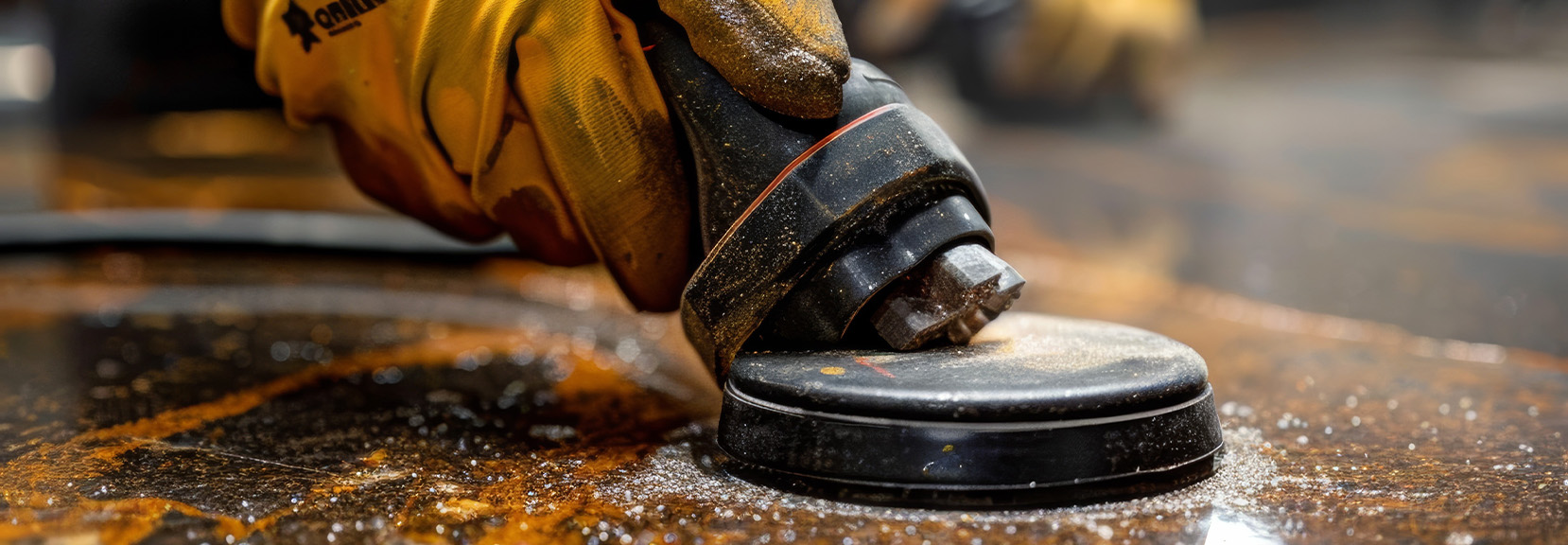
Granite makes you work for it. Polishing powders alone usually won’t get you there. You’ll need high-quality resin-bond diamonds to progressively bring the surface up, usually to 3000 grit, then finish with a granite-specific polishing compound. Heat plays a big role, granite needs friction and heat to bring up the shine, which means using the right speed, weight, and pressure. Skip a grit or get sloppy, and you’ll see cloudy spots or an uneven gloss.
Why Granite Is Harder to Work With
The short version: granite is tough, dense, and made of multiple minerals that respond differently to abrasion. Marble is soft, predictable, and easy to chemically react with polishing compounds.
That’s why granite:
- Requires more aggressive diamonds and lower starting grits.
- Takes longer to hone and polish.
- Needs more pressure, heat, and careful grit progression.
- Often demands granite-specific powders and pads to get a uniform shine.
If you’ve ever wondered why your granite job takes twice as long as your marble job, now you know.
Pro Tips
- Don’t Rush the Grits: Skipping grits is the fastest way to get an uneven finish on granite.
- Use Weight: Let the machine do the work. Granite responds better when you’ve got good downward pressure.
- Keep Diamonds Clean: Granite slurry can load up your pads and slow down the cut. Clean them often.
- Know Your Stone: Some “granites” on the market are actually gneiss or other stones that polish differently. Always test first.
Field Notes for Pros
Granite and marble require distinct honing and polishing approaches. Marble’s softness and chemical makeup make finishing easier, while granite demands tougher diamonds, longer grind times, and more careful grit progression. Mastering these differences will save you frustration and deliver professional results.