How Marble, Granite, and Other Stones Get Their Names
By Frederick M. Hueston
One Industry, Many Names
One thing that keeps this industry interesting—and sometimes makes you want to pull your hair out—is how stones get their names. There is no “stone naming police.” No official book that says what’s Carrara, what’s Calacatta, or what’s Fantasy Brown. If a quarry or supplier thinks a name will help sell the stone, they can use it.
That means one stone can have five different names, or worse, five different stones can be sold under the same name. As a restoration pro, that’s a recipe for confusion if you take the name at face value.
How Stones Get Named
Most names come from a mix of:
- Geographic location – “Carrara Marble” comes from Carrara, Italy, usually. But you will find plenty of “Carrara” from nearby quarries that do not look or behave the same. .
- Looks – “Blue Pearl” granite gets its name from the blue flecks that shimmer like pearl.
- Marketing – This is the big one. A bland-sounding quarry name gets turned into “Venetian Gold” or “Fantasy Brown” to move more slabs.
The result? You cannot trust the label.
A Few Problem Names We See All the Time
- Fantasy Brown – Sold as marble, but it is usually dolomite or quartzite. Restores differently than true marble, so treating it like one can get you in trouble.
- Black Absolute – True Absolute Black granite is from India. Some suppliers use the name for black stones from China or Zimbabwe that have different porosity and mineral makeup.
- Calacatta vs. Carrara Marble – Calacatta has bold veining on a whiter background, Carrara has softer, grayer veining. But plenty of “Calacatta” is not actually Calacatta at all.
- Super White – Often marketed as marble, but it is usually dolomitic quartzite or dolomite.
Why This Matters for Restoration Work
When you are restoring a stone, the name on the invoice is a starting point, not the truth. If you skip testing and trust the label, you could end up using the wrong abrasives, chemicals, or sealers.
Here are a few habits worth keeping:
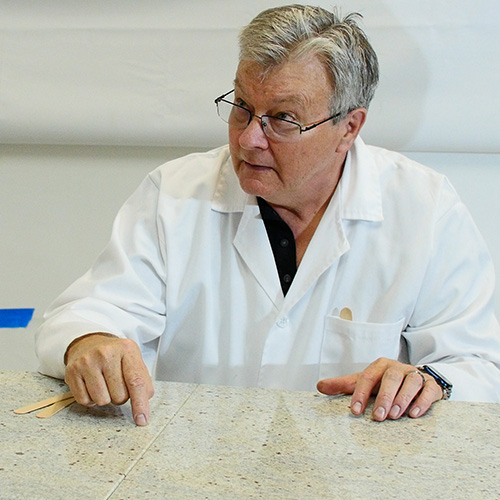
- Scratch test – Tells you hardness fast.
- Porosity test – See how much water it takes in. Good for separating granites from more porous materials. PRO tip: Do not depend on this test exclusively. Sealed stone may deter water absorption. Use it only as a step in the process.
- Visual check – Veining, color, and crystal structure can tell you a lot, especially once you have worked on hundreds of stones.
Do not let a pretty name fool you. Always verify what you are working with before you start. In our line of work, knowing the real stone type is what keeps you from wrecking a job or spending twice as long fixing it.