Olympic Curling Stones Are “Just Granite”
By Frederick M. Hueston
Every time curling comes on TV, someone says it. It’s just a granite rock with a handle. From a stone pro’s point of view, that statement should already sound suspicious.
Granite Is Not Granite
Granite is not granite.
Olympic curling stones come from one primary source, Ailsa Craig, a small island off the coast of Scotland. This isn’t a marketing story or tradition for tradition’s sake. It’s about stone performance under extreme abuse.
Built for Extreme Abuse
Curling stones take a beating. They collide with each other repeatedly, spin at high speed, and live in a freeze-thaw cycle their entire working life. Most granites would start breaking down pretty quickly under those conditions. Grain loss, micro-cracking, edge chipping, you’d see all of it.
The granite from Ailsa Craig is different. It’s exceptionally dense with very low porosity. That low absorption rate is the key. When water gets into stone and freezes, it expands. That expansion is what causes spalling, grain pop-out, and long-term failure. This granite simply doesn’t allow that process to happen easily.
Not Just One Piece of Stone
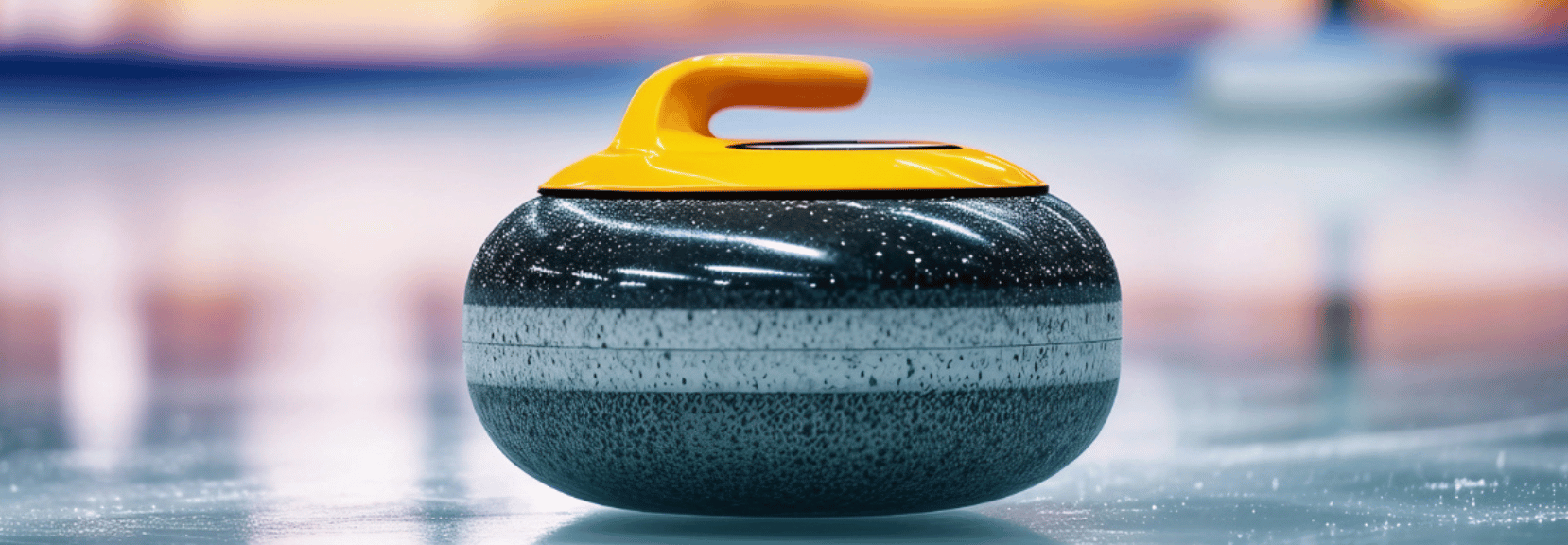
Another detail most people miss is that a curling stone isn’t made from just one piece of stone chosen at random. Different granites are used for different parts of the stone. The running surface, the narrow band that actually contacts the ice, is made from granite selected specifically for wear resistance. The body is made from another granite chosen for strength and impact resistance. Looks don’t matter here at all. Durability does.
Limited Quarrying and Precision Craftsmanship
Quarrying on Ailsa Craig is rare and tightly controlled. The island is protected, and stone extraction happens only occasionally. That alone puts limits on supply. Add to that the fact that curling stones are shaped, finished, and balanced by hand, and you start to see why these are treated more like precision equipment than sporting goods.
Cost reflects all of this. An Olympic-grade curling stone typically runs around nine hundred to one thousand dollars each. A full competition set of sixteen stones can easily approach fifteen thousand dollars. For comparison, many clubs use refurbished or non-Olympic stones that cost less, but even those are far from cheap.
Why This Matters to Stone Pros
For stone professionals, curling stones are a great real-world example of why density, porosity, and mineral structure matter more than a material name. Calling something “granite” tells you very little. How that granite behaves under stress tells you everything.
Final Takeaway for the Trade
So the next time someone says it’s just granite, you’ll know better. What you’re really watching slide down the ice is one of the toughest, most carefully selected stones in the world, doing exactly what it was chosen to do.