The Truth About Anti-Etch Coatings for Marble
By Frederick M. Hueston
What etching actually is
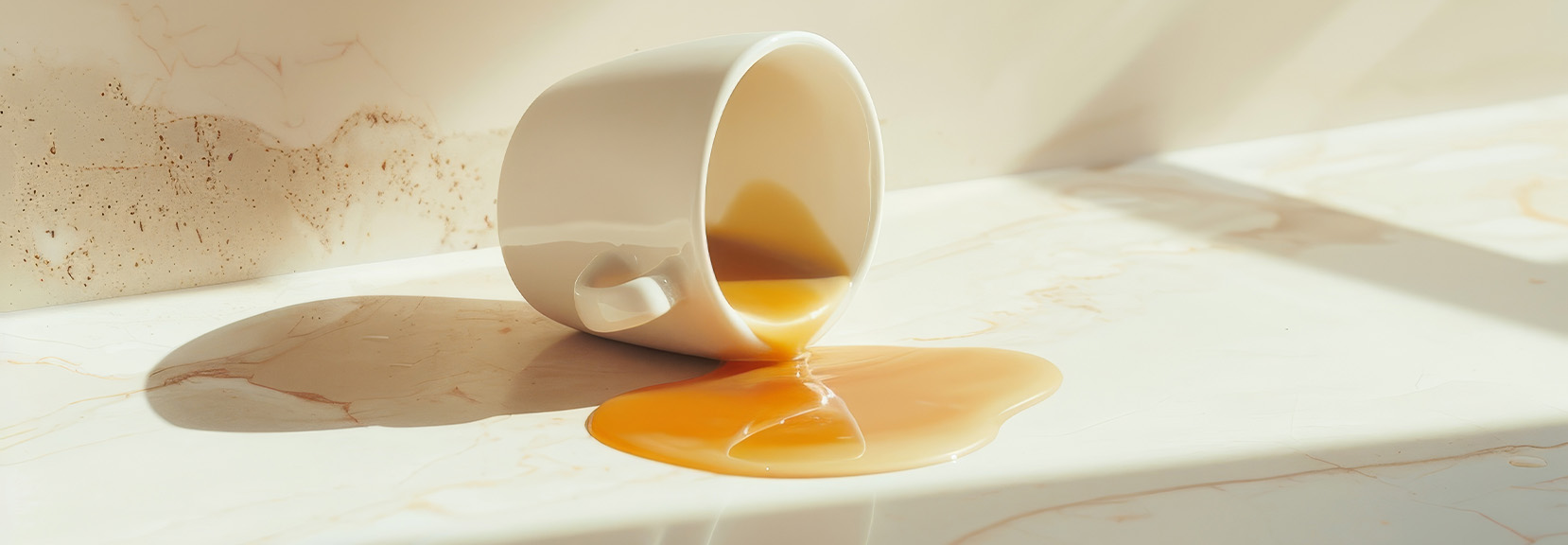
Etching is chemistry, not dirt. Acids dissolve calcite. Lemon juice, vinegar, wine, coffee, even many bathroom cleaners, all react with calcium carbonate and leave a dull spot. Impregnating sealers do a nice job with stains, but they do nothing for etch. If you want to stop etch, you need a barrier on top that the acid hits first.
What these coatings are
In our world you’ll see a few families:
- Two-part urethanes and polyurethane-acrylic blends, usually solvent borne
- UV-cured urethane or acrylate systems, cured with a lamp
- Silica or ceramic ‘nano’ topcoats that still behave like thin films
- Products marketed as ‘anti-etch sealers’ that are really just repellents with a touch of resin, better for stain control than etch
Only true film-forming coatings block etch. Everything else is marketing fog.
Where they shine
- Real etch resistance. Citrus, wine, and mild household acids usually won’t mark a properly applied film.
- Good for problem zones like bars, juice bars, kid islands, hospitality pantries, vanities in vacation rentals, outdoor bars with lots of mixers.
- Predictable maintenance. Instead of grinding and re-polishing every time a client panics, you can spot repair the film or re-topcoat a section.
- Finish control. You can deliver matte, satin, or high-sheen looks on finicky stones.
The tradeoffs you need to explain to clients
- Look and feel: Even the best systems can shift the optics. Expect a slightly ‘top-coated’ look on high polish, sometimes a faint orange peel under raking light. Honed stones usually take coatings more gracefully.
- Scratch and scuff behavior: Coatings resist acids, not abrasion. They will scratch.
- Heat: Hot pans and curling irons can print or soften some films.
- UV and yellowing: Most modern films are better than old ones, but direct sun can still amber some resins.
- Edges and seams: Build at edges can telegraph.
- Removal is work. Full strip-and-recoat is labor.
- Odor and VOCs. Ventilation and PPE are part of the job.
Prep and application that actually works
- Diagnose first. Confirm you are solving etch, not a stain.
- Degrease like you mean it.
- Flatten defects.
- Create the profile the product wants.
- Control the room.
- Thin, even passes.
- Respect cure time.
Care after coating
Use pH-neutral cleaners only. No vinegar or high-alkaline degreasers. Use microfiber, not abrasive pads. The coating is armor, not a chopping block. Plan for refreshes every few years.
Reliable, Current Pricing for Restoration PROS
- Residential countertops: $15–$30 per square foot, minimum $750–$1,500.
- Commercial bars: $18–$35 per square foot.
- Spot repair: $250–$600 per area.
- Full strip and recoat: $8–$20 per square foot.
- Maintenance plans: $2–$5 per square foot for inspection and touch-ups.
When to recommend, and when to pass
Recommend when the client wants etch protection for busy spaces or light marbles. Pass when they value natural look and low use areas where education is enough.
Floors and showers
Anti-etch systems are made for tops. Most are not slip-rated for floors and can fail in showers due to steam and heat. Always check data sheets.
Red flags and fine print
- ‘Stops scratches’ – No, it doesn’t.
- ‘Lifetime’ – Always check the exclusions.
- ‘No prep needed’ – Shortcut to callbacks.
- ‘Food safe on day one’ – Be cautious.
How to talk about it with clients
Keep it plain: ‘This coating shields your marble from acid. It changes the surface a little and it can scratch, but we can repair it without grinding your marble again.’ Then show a test square.
Quick estimating worksheet (Final Notes)
Measure, add 10–15% for complexity, multiply by rate, and include travel or ventilation gear. Offer a maintenance plan.