Understanding Cracks in Stone Countertops
By Frederick M. Hueston
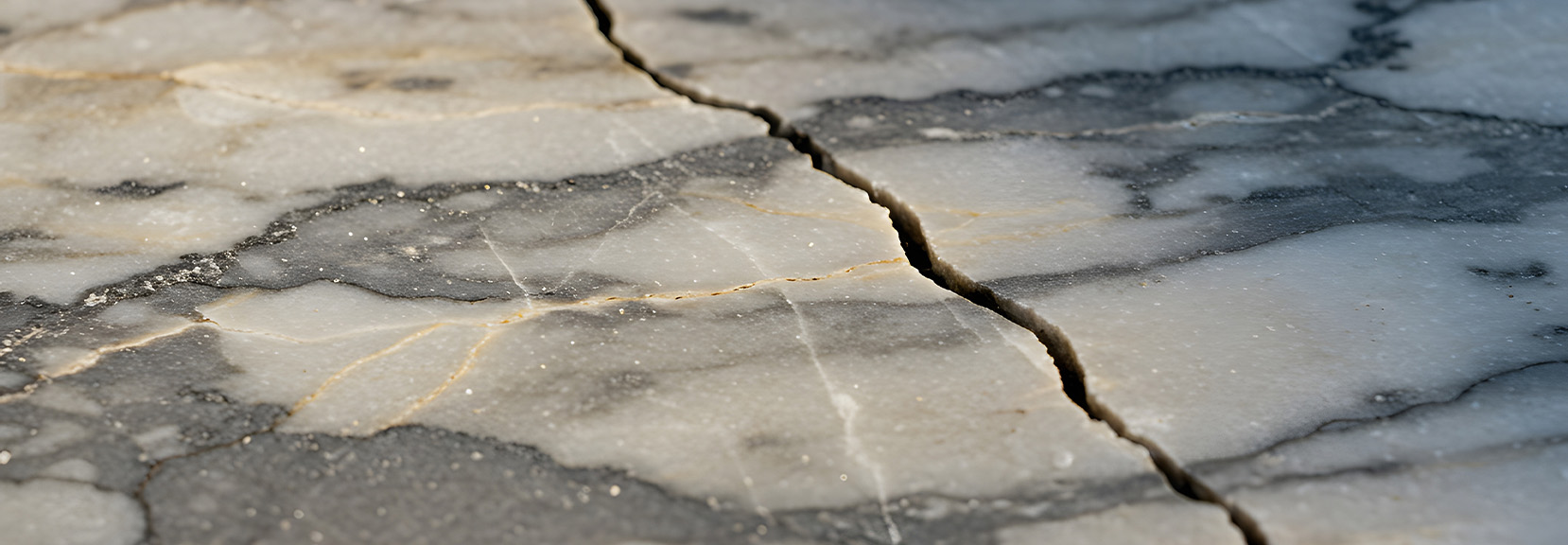
Cracks in stone countertops, whether granite, marble, or engineered quartz are a common issue for both homeowners and professionals. They hurt the look of the surface and can point to deeper problems with the material or installation. Here’s a breakdown of the main types of cracks stone pros encounter, what causes them, and the steps you can take to prevent them. Special attention is given to inside right-angle cuts, one of the most common weak points in countertop installations.
Hairline Cracks
Hairline cracks are fine, often faint lines that usually follow natural veins in stones like marble or quartzite. They are typically shallow but can deepen if the slab is under stress. They may come from natural weak points, handling errors, or stress from temperature changes or loads on unsupported areas.
Fissures
Fissures are natural features formed during the stone’s creation, not true cracks. While they can look like cracks, they aren’t considered defects. However, without proper support, heavy loads or temperature shifts can cause fissures to widen, especially in softer stones like marble or limestone.
Stress Cracks
Stress cracks are more visible and often appear across the slab in high-stress areas such as sink and stove cutouts. They usually stem from poor installation practices, like lack of support around weak areas. Heavy loads and leaning on edges can make them worse.
Expansion Cracks
Expansion cracks typically appear at seams in larger installations. Stone expands and contracts slightly with changes in temperature and humidity. If there isn’t room for this movement, or if joints aren’t sealed properly, pressure builds and cracks form. These are common in outdoor or seasonal environments.
Thermal Shock Cracks
Thermal shock cracks come from sudden, intense heat exposure. A hot pot placed directly on the countertop can cause the surface to expand unevenly and split. Quartz and some natural stones are especially prone to this type of damage.
Settlement Cracks
Settlement cracks result from building movement or shifting cabinetry. As cabinets or substrates move over time, they put stress on the countertop slab, often causing irregular cracks across the surface.
Inside Right-Angle Cracks
One of the most common failures is cracking at inside corners of sink or cooktop cutouts. Sharp 90-degree cuts create stress points that concentrate force in one area. Even normal vibrations or minor shifts can cause cracks here.
The solution is to use radiused cuts instead of sharp corners. Rounding inside corners spreads the stress across a curve rather than focusing it, greatly lowering the risk of cracks. Even a small radius of 1/4 to 1/2 inch makes a big difference.
Tips for Preventing Cracks
- Use proper installation practices, including full support under slabs and radiused cutouts.
- Avoid placing hot pots or pans directly on the stone. Always use trivets or pads.
- Keep heavy loads off unsupported areas, especially overhangs.
- For outdoor or fluctuating climates, select stones that handle expansion well, such as durable granites.
- Make sure expansion joints are included in large installations to accommodate seasonal changes.
Final Thoughts
Cracks in stone countertops can usually be traced back to stress points, poor installation, or environmental factors. With the right installation techniques and preventative care, many cracks can be avoided altogether. Understanding the causes gives restoration pros the tools they need to protect surfaces, extend countertop lifespans, and keep clients happy with stone that stays strong and beautiful for years.