What Is That Green Stuff on Exterior Stone?
By Frederick M. Hueston
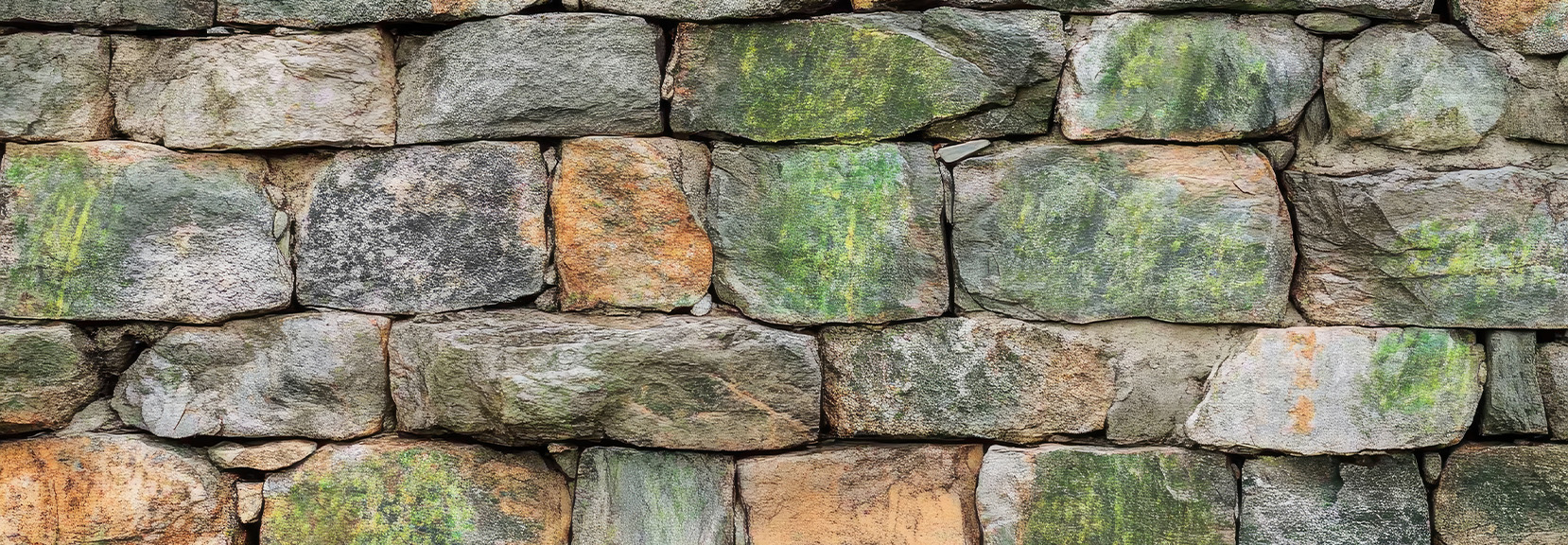
If you’ve ever worked on an exterior stone job and noticed a strange green stain creeping across the surface, you’re not alone. It’s a common problem that shows up on everything from marble facades and granite fountains to limestone sills and concrete trim. Most people assume it’s algae or mold, but that’s not always the case. That green color often has a metallic source: copper or bronze.
Where the Green Stain Comes From
When rainwater runs over nearby metal elements, like flashing, gutters, window frames, or decorative fixtures, it can pick up tiny particles of copper or bronze. As the metal oxidizes, those particles dissolve slightly and get carried down onto the stone surface. Over time, they react with moisture and air, forming copper carbonate or copper sulfate, both of which show up as a green or turquoise stain. The result is that familiar streaking or blotching you see under a bronze plaque, around a copper roof edge, or beneath a metal light fixture.
If you’re dealing with outdoor stone, especially limestone, marble, or sandstone, this kind of staining is fairly common. The stone itself doesn’t turn green; it’s the metal residue sitting on or just below the surface. In some cases, though, if the contamination has been there for years, the copper can migrate deeper into the pores, making removal more difficult.
How to Remove Copper and Bronze Staining Safely
So how do you get rid of it? Here’s a safe and effective process that’s worked for me and other pros:
- Identify the source first.
Before cleaning, look for nearby metal elements that could be bleeding onto the stone. There’s no point in cleaning if the runoff will just return after the next rain. - Use a sodium hydroxide-based cleaner.
Copper and bronze stains respond well to alkaline cleaners. Products that contain sodium hydroxide can help break down the metal compounds and lift them from the surface. Apply the cleaner according to the label instructions, and allow adequate dwell time, usually 10 to 20 minutes. Don’t let it dry out. - Agitate gently.
Use a soft nylon or natural fiber brush. Avoid anything abrasive, especially on polished or delicate stone. Rinse thoroughly with clean water. - Repeat if needed.
Deep stains may require multiple applications. In some cases, a poultice made with a sodium hydroxide cleaner or a metal stain remover can help pull the discoloration from deeper within the stone. - Neutralize and rinse again.
Once the stain is gone, neutralize the area with a mild acid rinse or pH-balanced cleaner, then rinse well to prevent any alkaline residue from reacting later. - Prevent recurrence.
If the metal source can’t be removed, consider applying a protective barrier or drip edge to divert water away from the stone. Regular cleaning and sealing will also help reduce absorption and make future cleanup easier.
Common Mistakes to Avoid
One mistake I see too often is people using acidic cleaners to remove green stains. Acid will make copper stains worse, not better, and it can etch calcareous stone like marble or limestone. Always go alkaline first.
Final Takeaway
That mysterious green stuff may look like mildew, but it’s often a chemical reaction between metal runoff and stone. Knowing the difference saves time, protects the surface, and keeps you from turning a simple cleaning job into a restoration headache.